

You’ve launched your business, found premises that feel right, and you’d rather own the place than hand rent to a landlord every month. Then you start looking into a commercial mortgage and hit the same wall again and again: lenders asking for two or three years of accounts you simply don’t have yet.
Here’s the short answer. Yes, a new business or startup can get a commercial mortgage in the UK. It’s harder than it is for an established company, and you’ll usually need a bigger deposit and a convincing business plan, but lenders say yes to newer businesses every week. The trick is knowing what they’re worried about and showing them you’ve got it covered.
This guide walks you through who qualifies, what lenders actually want from a brand-new business, how much deposit you’ll need, what it costs, and the steps that genuinely improve your chances. We’ll also cover a few alternatives worth knowing about if a commercial mortgage isn’t the right fit just yet.
| → Speak to a Mortgage Adviser — No Obligation |
What’s on this page
- Can a startup actually get a commercial mortgage? ⇊
- What lenders look at when you’re a new business ⇊
- How much deposit do you need? ⇊
- What does a startup commercial mortgage cost? ⇊
- Documents you’ll need to apply ⇊
- How to improve your chances of approval ⇊
- Alternatives to a commercial mortgage ⇊
- How UK Mortgage Finder can help ⇊
- Frequently asked questions ⇊
Can a startup actually get a commercial mortgage?
Yes — and it happens more often than you might think. A commercial mortgage is a loan secured against property your business uses or owns, such as an office, shop, café, warehouse or salon. Most run for terms between 3 and 25 years, and you borrow against the value of the building.
The catch for a startup is simple. Lenders normally judge affordability on past trading figures, and a new business doesn’t have any. So instead of leaning on your track record, they lean harder on three other things: your deposit, your business plan, and you — your experience, your credit history and, in many cases, a personal guarantee.
Worth knowing: there are two broad types. An owner-occupied commercial mortgage is for premises you’ll trade from yourself. A commercial investment mortgage is for property you’ll rent out to other businesses. New businesses most often want the owner-occupied route, and that’s the one this guide focuses on.
What lenders look at when you’re a new business
When you can’t show years of profit, a lender builds confidence from the things you can show. Expect them to weigh up:
- Your deposit. A bigger deposit lowers their risk, so it carries a lot of weight for a startup.
- Your business plan and forecasts. This is your chance to prove the numbers stack up. Realistic, well-researched projections matter far more than optimistic ones.
- Industry experience. If you’ve spent years in the trade you’re now setting up in, say so loudly. A chef opening their first restaurant is a safer bet than someone with no kitchen background.
- Your personal finances and credit. Lenders usually look at the credit history of the directors or owners, not just the business. A clean record helps.
- The property itself. A standard, easy-to-sell building is lower risk than something unusual. Lenders think about what they’d recover if things went wrong.
- A personal guarantee. Many lenders ask directors to personally guarantee the loan, which means your own assets could be on the line if the business can’t pay.
None of these are dealbreakers on their own. A weaker spot in one area can often be balanced by a stronger one somewhere else — a larger deposit, say, can offset a shorter track record.
How much deposit do you need?
More than you’d put down on a home. For a commercial mortgage, lenders typically want a deposit of 25% to 40% of the property’s value, which works out as a maximum loan-to-value (LTV) of roughly 60% to 75%.
As a new business, expect to land at the higher end of that range. Where an established company might secure 75% LTV, a startup is often asked for 30% to 40% down to balance the extra risk. On a £300,000 unit, that’s somewhere around £90,000 to £120,000.
It sounds steep, but there’s an upside: a larger deposit doesn’t just unlock approval, it usually wins you a better interest rate too, because the lender is risking less.
| → Find Out How Much You Could Borrow |
What does a startup commercial mortgage cost?
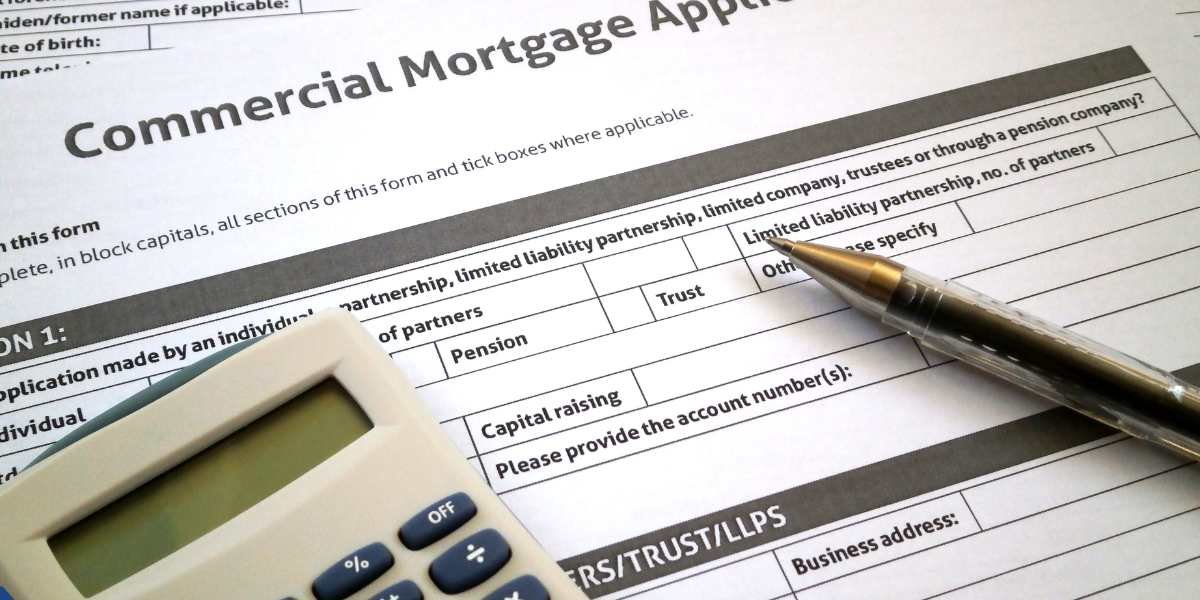 Commercial mortgage pricing works differently from residential. Lenders rarely publish rates, and each deal is priced to its own risk, so two startups can be offered very different terms.
As a rough guide, new businesses tend to pay more than established firms, reflecting the added risk of lending without a trading history. Many commercial mortgages track the Bank of England base rate, which sits at 3.75% as of June 2026, so your rate moves with it if you choose a variable deal. Fixed rates are also on offer if you’d prefer certainty over your payments.
Don’t forget the extras. Budget for an arrangement fee (often added to the loan), a valuation fee (usually higher than on a home, as commercial valuations involve more work), legal costs, and possible early repayment charges if you clear the loan ahead of schedule.
Because rates aren’t advertised and lender panels differ, this is one area where an experienced broker earns their keep. They can approach lenders who specialise in newer businesses rather than leaving you to knock on doors that’ll only say no.
Documents you’ll need to apply
Strong paperwork makes a lender’s decision easier, and an easy decision is a faster yes. Try to have these ready:
- A detailed business plan setting out your model, your market and your goals
- Financial projections — ideally checked by an accountant, which adds real weight
- Proof of your deposit and where it’s coming from
- Personal financial details for the directors or owners (income, assets, liabilities)
- Bank statements — business, and sometimes personal
- Details of the property you want to buy
- Evidence of relevant industry experience where you have it
- Your company details as registered at Companies House
The stronger and more honest your projections, the better. A lender would far rather see realistic numbers backed by research than rosy ones that fall apart under questioning.
How to improve your chances of approval
A bit of groundwork goes a long way. To put yourself in the strongest position:
- Save the biggest deposit you can. It’s the single most powerful lever a startup has.
- Get your business plan checked. Ask an accountant or someone who knows your sector to pressure-test the figures.
- Tidy up your credit. Clear small debts, check your file for errors, and avoid new credit applications just before you apply.
- Play up your experience. Spell out your background in the trade — it reassures lenders more than you’d expect.
- Pick sensible premises. A standard, lettable building is easier to finance than an unusual one.
- Use a specialist broker. Going straight to the high street often ends in a no for new businesses; a broker knows which lenders are open to startups.
Alternatives to a commercial mortgage
A commercial mortgage isn’t the only way to fund premises, and sometimes another route fits better while you’re finding your feet:
- Bridging loans — short-term finance with more flexible criteria, handy if you need to move fast or aren’t quite ready for a mortgage. They cost more, so most people use them as a stepping stone and refinance later.
- Secured business loans — a lump sum secured against an asset, often more accessible than a mortgage.
- Asset finance — useful for funding equipment and vehicles rather than the building itself.
- Unsecured business loans — no collateral needed, though usually smaller and pricier.
Each comes with trade-offs, and the right one depends entirely on your situation. A broker can help you weigh them up rather than guessing in the dark.
How UK Mortgage Finder can help
 Getting a commercial mortgage as a new business is far easier with someone in your corner who knows the market. UK Mortgage Finder is a free service that connects you with experienced, FCA-regulated mortgage brokers who understand startup lending.
Rather than applying to lenders who’ll turn you away for lacking accounts, you’ll be matched with advisers who know which lenders welcome newer businesses — and how to present your plan in the best light. There’s no obligation, and the introduction won’t cost you a penny.
It’s worth knowing that most commercial mortgages aren’t regulated by the Financial Conduct Authority, which makes good, experienced advice all the more valuable. A broker helps you sidestep costly missteps and find terms suited to your circumstances.
| → Speak to a Mortgage Adviser — No Obligation |
Frequently asked questions
Can I get a commercial mortgage with no trading history?
Yes, though you’ll face more scrutiny. Without accounts, lenders rely on your deposit, business plan, projections and experience. A larger deposit and a well-researched plan make a real difference.
How much deposit does a startup need for a commercial mortgage?
Usually 25% to 40% of the property’s value. New businesses tend to need the higher end — often 30% to 40% — because lenders price in the extra risk.
Are commercial mortgages regulated by the FCA?
Most aren’t. The majority of commercial mortgages fall outside FCA regulation, which is one reason using an experienced broker is sensible.
How long does a commercial mortgage take to arrange?
Typically around 6 to 12 weeks, depending on the lender, the property and how quickly your documents come together. Having your paperwork ready speeds things up.
Can a sole trader get a commercial mortgage?
Yes. Sole traders, partnerships, limited companies and LLPs can all apply, including for owner-occupied premises.
Will I need to give a personal guarantee?
Often, yes. Many lenders ask directors to personally guarantee the loan for a new business, which means your personal assets could be at risk if repayments aren’t met.
What interest rate will I pay?
It varies by deal and isn’t usually advertised. New businesses generally pay more than established firms. Many deals track the Bank of England base rate, while fixed options are also available.
Can I use a commercial mortgage to buy premises I’ll rent out?
Yes, but that’s a commercial investment mortgage rather than an owner-occupied one, and the criteria differ. Lenders will look closely at the expected rental income.
The bottom line
So, can a new business or startup get a commercial mortgage in the UK? Absolutely. You’ll need a healthy deposit, a credible business plan and a bit of preparation, but newer businesses secure commercial mortgages all the time. The lenders that say yes are out there — the challenge is finding them and presenting your case well.
If you’re ready to explore your options, speak to an FCA-regulated broker who works with startups. They’ll tell you honestly where you stand and what’s realistic for your circumstances.
| → Get Expert Advice — It’s Free |
Written by Jack Taylor
UK Mortgage and Finance Expert, breaking down mortgage options and helping UK homebuyers and landlords with clear, practical guidance.
Further reading
- Commercial mortgages explained
- Bridging loans — fast, flexible short-term finance
- Self-employed mortgages
- Buy-to-let mortgages
- More mortgage guides on our blog
| Important: The information in this article is for guidance purposes only and does not constitute financial advice. You should seek independent advice from an FCA-regulated mortgage adviser before making any financial decisions. UK Mortgage Finder introduces customers to FCA-regulated mortgage brokers and advisers.
Your business premises may be at risk if you do not keep up repayments on a commercial mortgage. Where a personal guarantee is given, your personal assets may also be at risk. Think carefully before securing debts against any property.
|